How to write a sales letter that converts
Introduction
- Every successful entrepreneur is good at selling.
- Even if you have the best product or service in the world, if you don’t know how to communicate that, it will be challenging to make sales.
- As an internet entrepreneur, you must be able to sell without talking to a prospect face-to-face, which is why learning the skill of copywriting is extremely valuable.
-
Copywriting, in a nutshell, is selling with words:
- Sales letters.
- Product descriptions.
- Emails.
- Pay-per-click ads.
- Video scripts.
- Your ability to write copy has a direct effect on your earnings. If you write a sales letter that gets 3 out of every 100 visitors to purchase a $97 product, that’s $291. If your letter had only converted 1 visitor into a sale, it’s just $97. The better you are at writing pay-per-click ads, the higher your click-through rate is. This means you pay less per click and get more traffic.
- You can hire someone to write copy for you, however, it’s good to at least know the fundamentals so when you need copy quickly (or are on a budget), it allows you to get the job done and bring in sales on your own.
- You don’t need to be a good writer to be good at copywriting. In fact, it’s often more challenging for people who excelled at writing in school (particularly in literature) to become good at copy, in comparison to someone who considers themselves a bad writer.
- The reason is because good copy is conversational. It’s written as if you’re talking directly to the reader. This means sometimes breaking grammar rules: when people are talking to each other they’re not focused on speaking with perfect grammar and sentence structure.
-
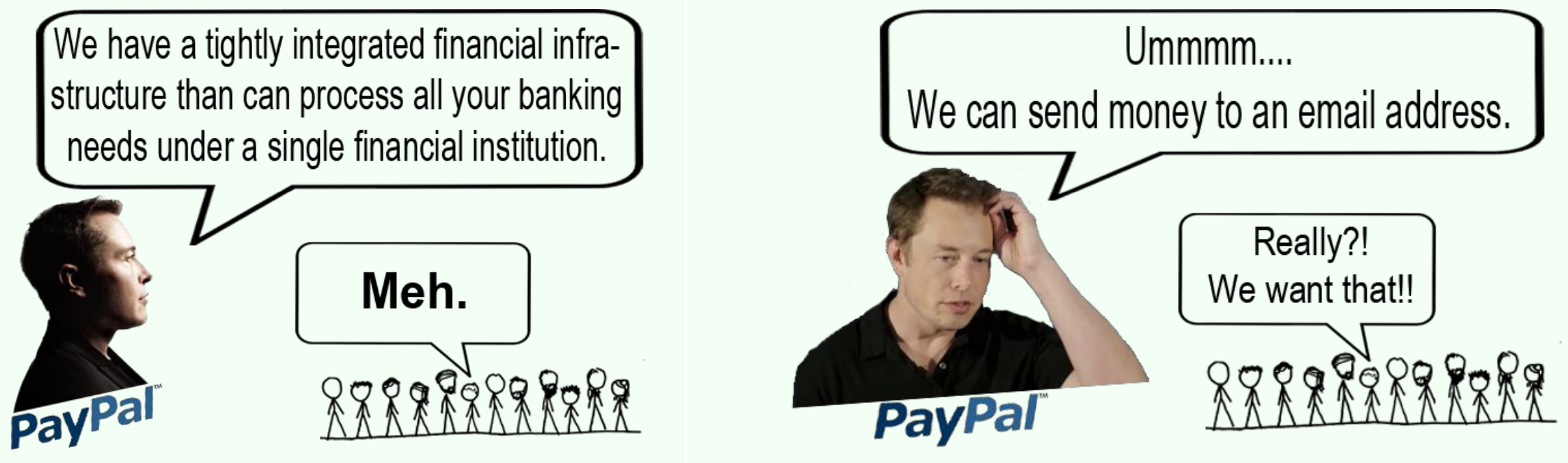
Being overly formal and sounding fancy can wind up hurting your sales. The below example that Neville from KopywriterKourse shared about PayPal’s original fancy sales pitch v. the one that helped the company gain financing and grow is a perfect illustration:
Copywriting formulas
-
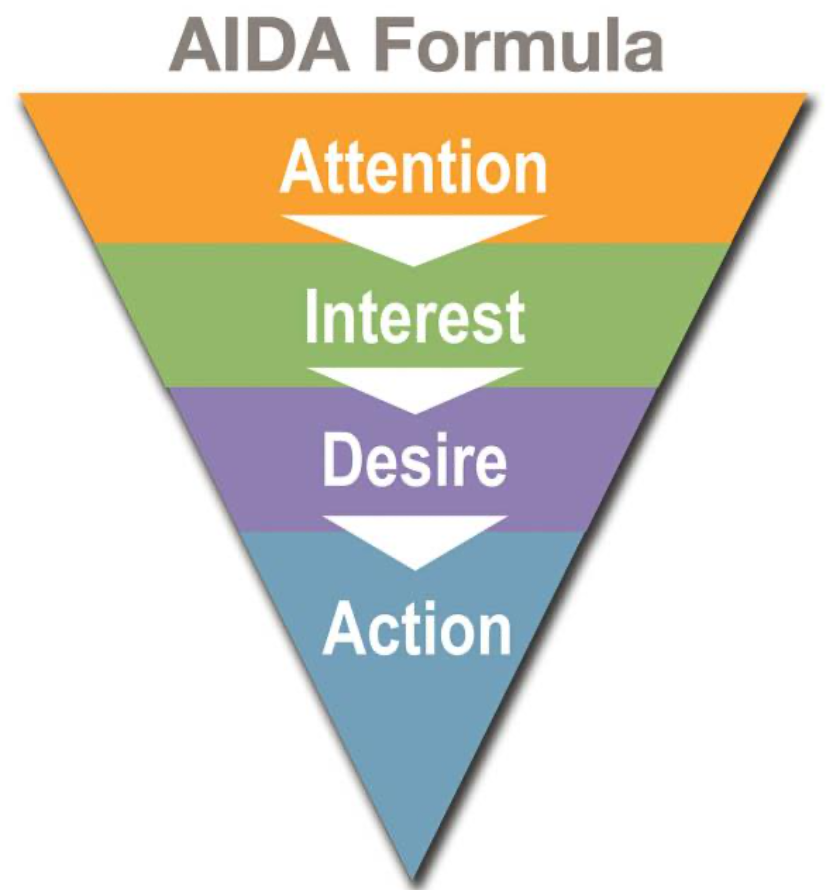
As when learning any other internet marketing skill, don’t become overwhelmed by how many different “greatest formulas” you see. There isn’t one single greatest formula for copywriting; there are many ways that work. What’s most important is that you understand what your ideal customer truly wants, have a good offer, and understand the fundamentals of how to sell. Most copywriting formulas are variations of the traditional AIDA formula, which stands for:
- Attention.
- Interest.
- Desire.
- Action.
- Over the years, several sales letter formulas have been shared by high-paid veteran copywriters, based on their years of testing. I’ll take you through one such sales letter formula that is very effective. You can use this to write sales letters for digital products, membership sites, SAAS software, physical courses, and even physical products.
- The difference with physical products on eCommerce sites or Amazon is you typically have a very short product description. That doesn’t mean you throw all copywriting components out the window. You still use the same principles, in a very condensed way. I’ll go over this in more detail at the end of the formula.
Research

“You don’t stand a tinker’s chance of producing successful advertising unless you start doing your homework. I have always found this extremely tedious, but there is no way around it.”
- Before writing any copy, it’s important to do a lot of research. Creating a customer avatar, which is covered in another tutorial, gives you an edge in all sales copy you write. When you deeply understand your ideal customer, you know what to say to connect and lead them to take action on the products and services that serve their needs.
- After completing your research, you’re ready to begin writing the sales letter.
Headline
- This is the attention aspect, which means you need to get the person’s attention and interest to entice them into taking a look at what you have to offer.
- Although all aspects of copywriting are important, the highest priority to focus on is writing headlines. This is because the headline is what draws people in (or doesn’t).
- All marketing starts with a headline. It might be the headline of an Adwords ad, Facebook ad, Pinterest post, blog post, sales letter, eCommerce product headline, advertorial, direct mail piece, etc.
- If people don’t read past your headline (or click on it, in the case of an ad), then you’ve already lost the sale.
- On a webpage, the headline is the largest text near the top of the page. It’s one or two sentences, often sandwiched between a pre-headline and sub-headline.
- Your goal is to write 8–12 headlines for your piece of copy, then narrow those down to the 2–5 you believe will perform best. Then, run a split test, sending at least 100 visitors to each headline (200–500 total).
-
There are many effective headline formulas that work well. One that’s universally applicable for just about any product or service is:
(It doesn’t necessarily have to be in this order: you can rearrange these in the headline.)
Result wanted + Time it will take + Overcome top objection(s)
-
Start the process by listing out several bold, specific promises you can actually fulfill with your product. If it’s a language learning product, perhaps you can promise:
- Speak conversationally in 2 weeks or less.
- Be fluent in 6 months or less.
- Takes only 20 minutes a day.
- Is a fun process.
-
List objections you’ve found people may have (from your research):
- Takes too long.
- It’s too difficult.
- Don’t have time.
- Not good at memorizing things.
- Boring, laborious.
- Hate studying.
- One thing that people universally will want is for things to be fast. The better you can become at developing or sourcing a product that gets the result fastest, the easier it will be to sell.
-
It’s also useful to list out reasons why they want the result:
- To travel to China.
- To communicate with a romantic crush or friend.
- To do business in China.
- To impress people.
- To achieve a bucket list goal.
- Keep in mind that before writing the copy, you should obviously have a clear idea of who the product is for so that you can tailor the sales message to them (your “ideal customer” or customer avatar). For instance, you’ll write differently to someone who wants to learn Chinese for their career than a person who just wants to be able to speak enough Chinese to travel comfortably in that country.
- You can still sell to both, but segmenting and using different messaging for each segment gets you better results.
-
Now you’re able to take what you’ve come up with and truly understand how to correctly plug it into proven headline templates. Here’s another:
At Last, [credible source] Has Created the
[Descriptive Adjective] Method to [Achieve Result]
- [Overcome Objection]Example:
At Last, Neuroscientists Have Discovered a Revolutionary Method to Speak Any Language Fluently in 100 Days or Less – Plus it’s Fun, Easy and Takes Just 20 Minutes a Day.
-
Rather than list out dozens or hundreds of headline formulas here, below are great free resources with 100+ headline formulas to use:
- 106 tested, response-winning headlines from master copywriter John Caples.
- 102 Proven Headline Templates With 200+ Examples.
- 41 Classic Copywriting Headline Templates.
Hook
- You got their attention, but can you keep it? Your job with the hook is to essentially convince the prospect to continue reading, and that they’re in the right place: meaning you understand their problem and are going to help them.
- The hook can be a shocking statement, interesting/uncommon facts, an outrageous claim, a catchy phrase, and/or a good story (that ties into the product being sold).
-
The hook is usually built into the headline and convinces people to keep on reading. It could also be a subheadline or the second part of a headline. Some examples of hooks (in italics):
- The 4-Hour Workweek: Escape 9–5, Live Anywhere, and Join the New Rich
- Hate Clickbait Articles? This is Why!
- 10 Foods to Avoid If You’re Trying to Lose Weight
- Ecom Hacks: How this one simple trick will boost your profits by 95%
Agitate
- This part has two goals. One is to make it clear you understand the problem they’re facing. If you clearly can describe the problem in their “language” so well that they feel you truly understand, it creates an automatic assumption that you must know how to solve it.
- Many sales pitches go straight for announcing the benefits of something, completely missing the connection and empathy aspect that expresses you have deep knowledge of the problem (which lends credibility to your ability to do something about it).
- You’ll do this by painting a mental picture of the difficulty and pain they’re currently suffering. Paint a mental picture of their life right now with this issue. How is it affecting their life? How do they feel? What struggles are they having that they wouldn’t be if it weren’t for this problem?
- Bring the pain and negative emotions to the surface, amplifying it enough so right now becomes the moment they are finally going to fix it. Depending on what it is, the problem may get worse, and become more difficult (or impossible) to solve later. You may not want to make the reader feel these negative emotions, but if your product truly helps, you owe it to them to be a motivational force that creates the drive to finally do something about it.
Provide the solution
- Now you lead them away from the pain and into experiencing the emotions of how life will be on the other side, having achieved what they desire.
- Use descriptive language and stories to paint a mental image of this better life and the feelings of relief, happiness, excitement, freedom, or other emotions they’re likely to have once the result is achieved.
Prove credibility
At this point, they really want to solve the problem, but may be feeling skeptical. Who are you to solve it, if nothing else has helped? What makes you and your product or service special? Gain their trust and prove your credibility with:
-
Borrowed Credibility—“As Seen In.”
Have you been featured or published in a well-known publication? Newspaper, podcast, television show, magazine, book, etc. The more of a “household name” it is, the better, e.g. CNN, ABC, &c. The idea is: if you are associated with such a big-name brand, then most people assume you must be credible. However, industry-specific relevancy is also important. An animal product featured on Animal Planet is better than being on ABC.
Adding these “As Seen In” tags is much easier than you think. Often, you simply need to publish a press release to be “seen” in major publications.
-
Awards/Certificates.
Awards or certificates can help to boost credibility as well. If you’re selling a product that helps someone save money on electricity, and you’re a certified electrician, that will work in your favor.
-
Social proof.
There is one form of credibility booster that always works incredibly well, and that is social proof. Customer testimonials, case studies, social media pages with hundreds of thousands or millions of followers, social proof website apps… anything proving you have raving fans and customers is a very strong selling point.
Avoid credibility killers. Take precaution not to do anything to sabotage your credibility. Some big reputation killers are:
-
Exaggerated claims and hype that aren’t true or can’t be proven.
If you can make a bold promise and prove it’s real, that’s great. Do not use unfounded hype and exaggeration though.
Someone once told me about a company they came across claiming to be the “only” healthy-eating franchise in the world. That obviously can’t be true, and that one statement instantly caused disbelief in everything else they said.
-
Being out of date.
One of the great things about having an internet business is being able to keep making money from a website you haven’t touched in months (or even years). However, that website may be losing sales simply because the copyright date is not current.
Even if the information in the product is evergreen, people may wonder if they’ll even get the product when they order, if anyone will be around to answer their support questions, and other similar concerns.
Features & benefits
- To achieve hard-hitting, persuasive copy, you need both features and benefits. Neither are effective without the other. Features alone don’t make it clear what benefits the customer gets, and you need to back up the benefit claims you’re making with the features that cause them.
-
This is actually very easy. First, you create a list of all the features, then simply link each one to the benefit it causes by adding any of these phrases to the end of the feature. Here are some examples:
-
which means
Over 500 freelancers available, which means you’ll get things done faster and cheaper by taking advantage of our choice of talent.
...is only 20 pages, which means you can quickly digest the information, put it to use immediately, and see same-day results.
-
so you can
Batteries included so your children can immediately start having fun (and give you space to relax).
15mb/second download speed so you can enjoy your favorite movies almost instantly – no waiting.
It doesn’t have to be the exact words. The point is that you are describing why the features create the benefit, using whatever verbiage you prefer.
Doing this gives your sales copy an edge over competitors who are claiming benefits without any proof or explanation, leaving shoppers unsure if the product will really deliver on its promise.
-
which means
-
Paraphrase the most compelling benefits into bullet points.
It’s very common for website visitors to skim your sales copy. Hardly anyone reads it word-for-word from start to finish. Bullet points naturally draw attention, as well as help to visually break up an overwhelming page filled with dense paragraphs.
The eye is pulled to bullet points while skimming, which is why they’re crucial for a high-converting sales letter. Often, a purchase decision will be made because of one single bullet point.
This is not only true for $29 ebooks; it can be the case for products costing thousands of dollars. One bullet point can be the factor between getting the sale or not.
If you want to get really good at this, the best way is to study bullets the highest-paid direct response copywriters have used in their ads.
Here are some effective bullet point formulas:
-
The if/then bullet formula.
If you’ve got 20 minutes a day, then I guarantee you can be fluent in Spanish in 6 months or less.
-
The how to bullet formula.
How to shave 20% off your monthly electric bill.
-
The key bullet formula.
The key to having the greenest lawn on the block.
-
The easiest way bullet formula.
The easiest way to get a toned bikini body, just in time for summer.
-
The warning bullet formula.
Warning: Don’t say this phrase when shopping for a new car (unless you like being overcharged).
All (or most) bullet points should have an element of curiosity to them. Many people will buy simply because you triggered their curiosity and they can’t stand not knowing the answer.
-
The if/then bullet formula.
Present your offer
- Next, you’ll present your offer, along with a value stack that makes the deal even more irresistible. A value stack is where you communicate the value of what they receive compared to the price they’re paying for it.
- The offer is the most important of it all. If you don’t present an offer people want, it won’t matter what your copy says because it’s not something people want. If you’ve done the offer right, they are getting 10x or more their money’s worth between the core product and supplemental bonuses included. The goal is to make the offer so good it would be crazy of them not to get it.
Motivate with scarcity
- Scarcity is what lights a fire under someone and gets them making a buying decision now, instead of bookmarking the page to come back “later” (and most likely forgetting about it). You can implement scarcity via limiting the supply, offering a discount for a certain timeframe or number of customers, or having a deadline when a certain bonus goes away.
- The caveat is people are savvy these days, and you can easily sink your credibility with countdown timers that reset after reaching zero. If you state that an offer is going away, it better end when you say it will. Otherwise, if someone comes back after the so-called deadline and it’s still available, you’ve lost your reputation. This could even be taken as a form of false advertising. Either way, you’ve lost that person’s trust, which makes it unlikely they’ll believe any other claims you’ve made regarding the product.
- That’s why it’s good to have multiple offers, even for digital products. Then you can legitimately use scarcity with deadlines and still have income from other sources when one offer closes.
Overcome objections
- Throughout all your copy, you should be addressing and overcoming objections. In headlines, bullets, subheads, and metaphorically through storytelling.
- Direct response marketing expert Dan Kennedy advises making a list of every possible objection and question your prospect may possibly have, then answering all of them throughout the sales letter.
- For example, a common objection is “I can get the same results by myself without the product.” You can overcome this objection in an effortless way by simply telling your story of all the hard work, mistakes, and effort it took to get where you are—and how your product saves the reader from having to endure what you did.
- Another is not being able to afford it. To overcome this, demonstrate throughout the copy how it either helps the customer make more money or save money. Or, how it provides something worth much more than money.
-
Another common objection is not having enough time. Ideally, your product helps the customer achieve the result faster than they would without it. You can squash this objection either by making it clear your product helps achieve the result faster—and remind them of reasons why it’s worth putting in time to achieve this:
How you can write and publish a best-selling book in 30 days, writing for just one hour per day.
-
Objection Rebuttal Formula.
Here’s a great objection template you can modify and use for your offer:
If you’re serious about [achieving result], you may be asking yourself, “[their objection].” To answer this question, we’ve created [your product/system].
Guarantee
- Prospects fear disappointment, and that fear of risk can cause you to lose sales. The more you do to eliminate risk, the more people will take the plunge and purchase.
-
You can use a standard satisfaction guarantee, a results-based guarantee, a service guarantee (think Domino’s Pizza old delivered in 30 minutes or it’s free guarantee), or come up with your own unique guarantee by combining these.
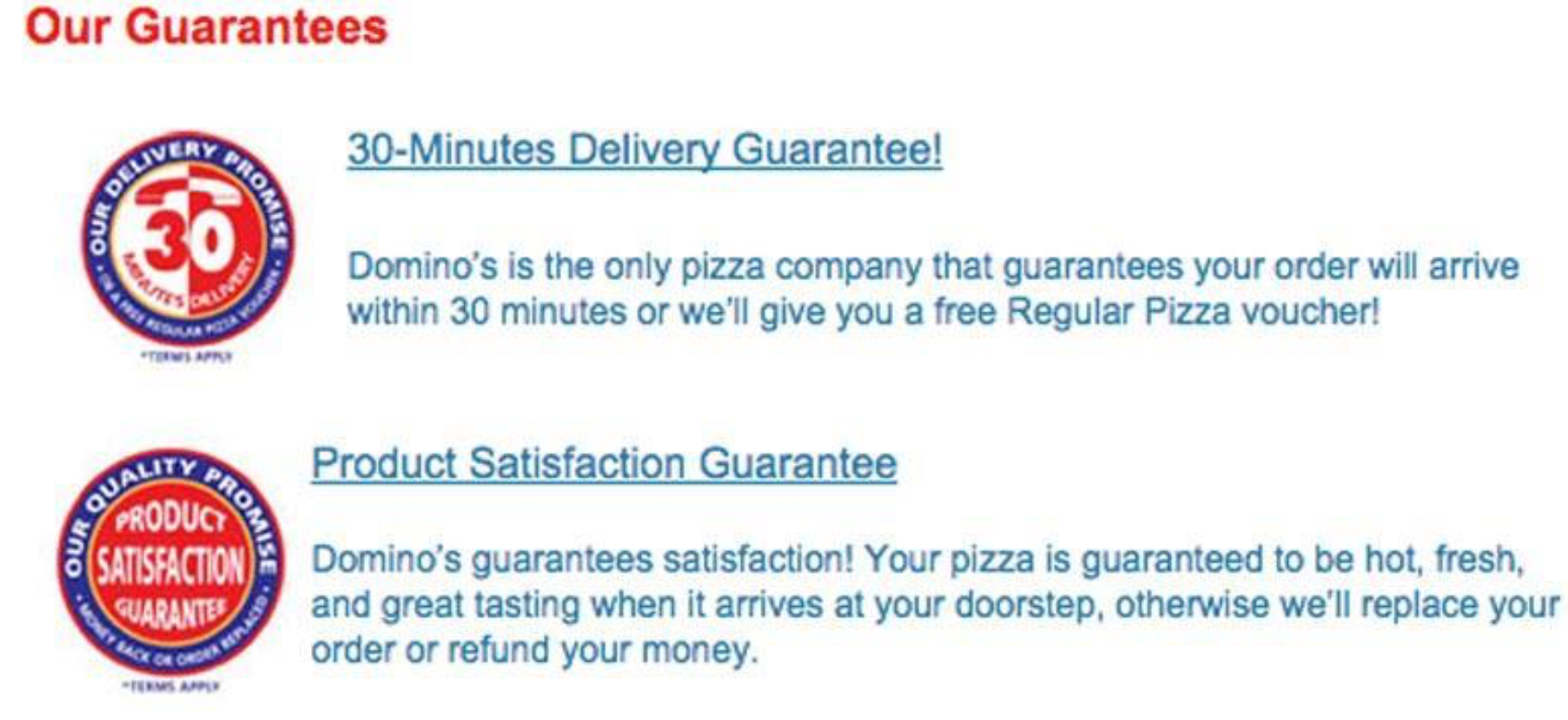
- One very strong guarantee is the “get xyz results or we’ll double your money back!” To protect yourself from fraudsters claiming the guarantee just to get the money, be sure to have a reasonable requirement, such as they need to complete certain actions that you have confidence will get them the results promised.
- Do some browsing for other guarantees in your industry as well as outside your industry, then use that as inspiration for a unique guarantee of your own. Having a unique guarantee for your industry differentiates you from competitors your prospect might be considering, pushing them over the edge to choose you instead.
-
Guarantee “hack.”
It’s been tested and proven time and time again that giving customers a longer refund period results in fewer refunds. This is likely because when the guarantee period is very short, customers feel more pressure to make up their mind before they’ve lost their money forever. Without instant results (or if they haven’t yet taken the time to try it) and a return window that’s coming to a close, that pressure and fear ends up causing a refund.
Call to action
- The call to action is where you tell the prospect what to do next to claim the offer. Whether the action is to subscribe, purchase, share your content, or some other action: you make it very clear exactly what to do to take the next step.
-
The best call to action will have a benefit in the phrase itself. Rather than something vague like click here, subscribe here, order now, etc., use phrases that speak to the desired result such as:
- Start Building Your Landing Page Now
- Click For 30 Days of Unlimited Free Movies
- Book Your Next Adventure Today
- When formatting your sales copy, make the call-to-action area stand out so when the prospect is ready to take action, it’s easy to spot the place to move forward. Most people are not going to read your copy word for word from beginning to end. They will skip around, skim through, and then look for the buy/subscribe button.
-
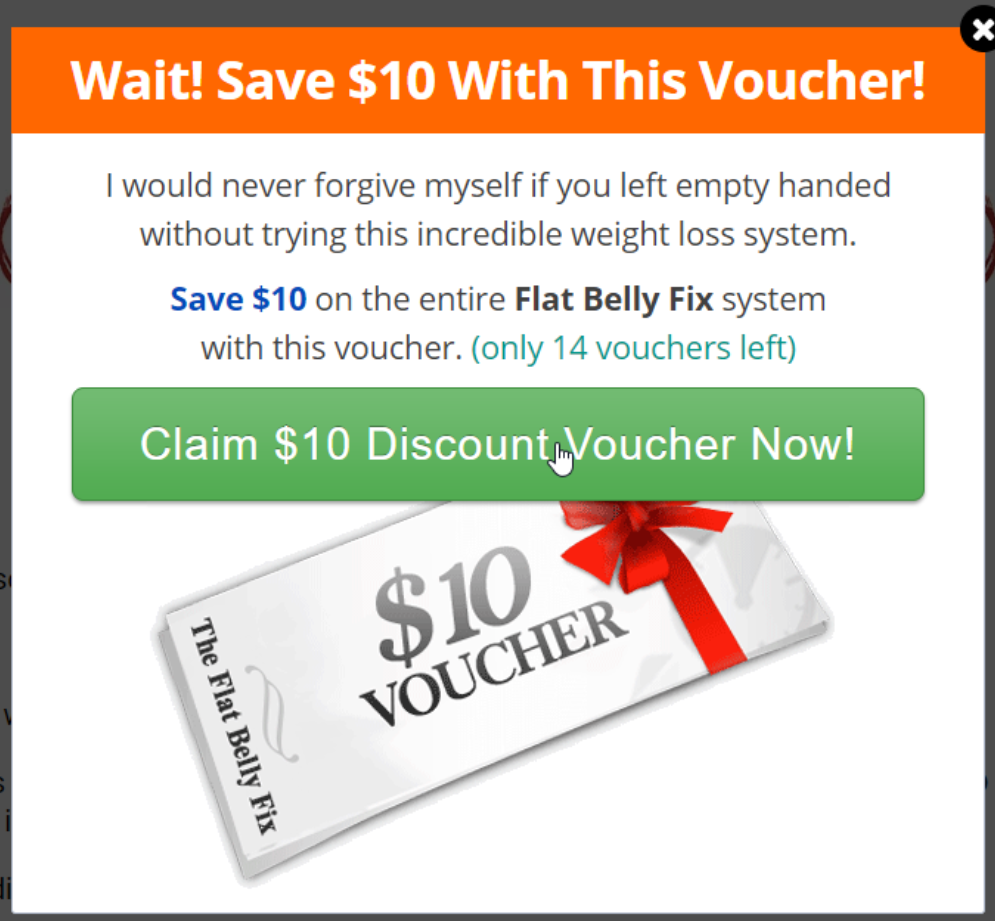
Often in sales copy, a pop-up box will appear a few seconds later or if you are about to leave the site with an extra enticement:
Call to action warning
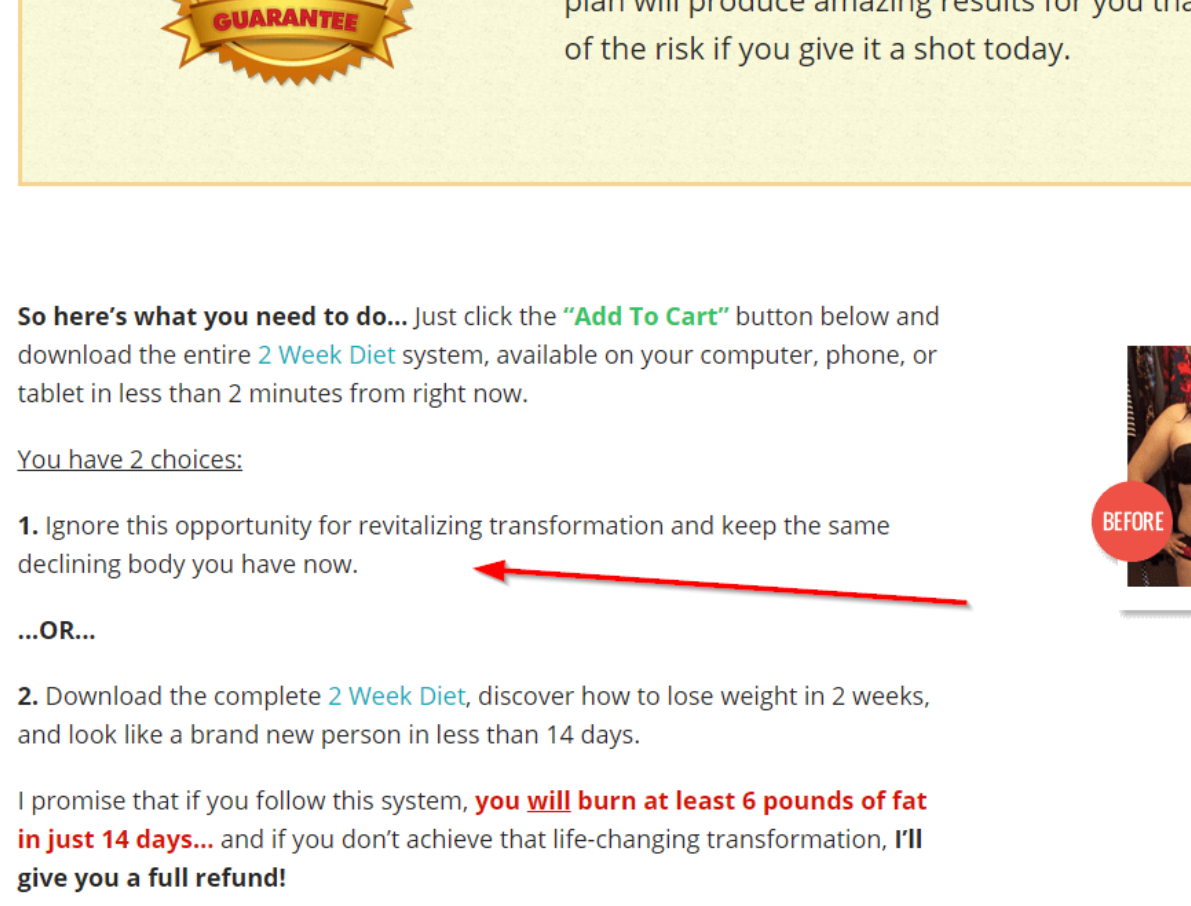
- If a prospect hasn’t clicked the call-to-action yet and is still reading, provide a warning of how their life may turn out if they don’t take action. Remember, earlier we learned many people haven’t solved their problem because they either haven’t found the right solution/product/service or are procrastinating and not making it a priority.
-
Your warning will help show the consequences of not taking action now. Perhaps their health will further deteriorate, or their financial situation will continue to get worse. Time will pass, and they’ll lose opportunities that can’t be regained.
Call to action final
Recap the entire offer and remind them of all the value they're getting. Summarize the problem again, along with the solution, the offer, guarantee, the benefits of taking action v. painful consequences of not, and proof others have benefitted from it already. This is the final reminder and their last chance to make a decision. Reiterate scarcity. If they don't take action now, they may lose the opportunity forever.
Applied to physical products
- This formula works because it includes components that are persuasive, no matter what the product or service is. Social proof, compelling benefits, a strong guarantee, and so on are just as important for a physical eCommerce product as a digital course or membership site.
-
eCommerce product pages (e.g., on Amazon) certainly require less copy, for several reasons:
- They’re self-explanatory. A mixing bowl, a basketball, a lawn chair… people already know what it is and don’t need convincing (except to buy yours specifically).
- Images are more important to shoppers for physical products. The images do most of the selling.
- People are more concerned about quality, the speed of shipping, the return policy, and so on.
- Since you are not teaching information, there is no need to prove the credibility/experience of the trainer/publisher. However, you will definitely need social proof in the form of great reviews and social presence, and “as seen on” will also go a great way to show the popularity of your product.
- Collector items and higher-priced items will still need a bit more copy. One good rule of thumb is to consider the level of risk the buyer is taking. The higher the risk, the more copy you may need to alleviate their fears.
- There’s no “rule of thumb” regarding length. By doing your research properly and understanding your ideal customer, you’ll know what needs to be said and what you can leave out.
-
Agitating the problem may be something as simple as:
Tired of wasting time peeling hard boiled eggs one by one?
Lead into solution:With our magic eggxtractor, you’ll have a delicious hard-boiled egg ready to eat in just seconds without any hassle.
Social proof may be one short phrase:“27,485 customers love us.”
and list some testimonials. On Amazon, these will obviously be reviews.
Scarcity:Only 3 left in stock!
Guarantee:Convenient, easy return policy.
Applied to video
- These days, many sales letters are now videos (or videos with text copy).
- However, that doesn’t mean that none of these techniques work.
- If you watch modern sales videos, you’ll see that the exact same formula is being used, and in the same order!
- Most videos are glorified PowerPoint presentations with text, images, and video clips based on this sales letter formula.
In practice
-
Compile your research and write a rough draft sales letter, then go back through it and ask yourself these questions:
- Does your headline grab the attention of your ideal customer?
- Did you make it clear you understand their problem?
- Did you include so much proof of your solution they can’t possibly have any doubts about its credibility?
- Did you express the benefits of your solution and paint a mental image of how it makes their life better?
- Did you show how quickly their problem will be solved by using your solution?
- Did you demonstrate the pain and consequences of not solving this issue right away?
- Did you provide such an amazing value in your offer that your ideal customer would feel stupid to not take you up on it?
- Did you give a reason to buy now and not wait until later?
- Keep working on it until you can say “yes” to these questions. Then, let it sit for several days and come back to it with fresh eyes. Let a friend read it.
- As you go through it, read as if you’re a potential buyer, and see if it compels you to buy. If not, what’s missing? Go back to your questions and make sure it’s all covered.
- Then read it all out loud from beginning to end. If there are any spots you stumble over, adjust the wording.
-
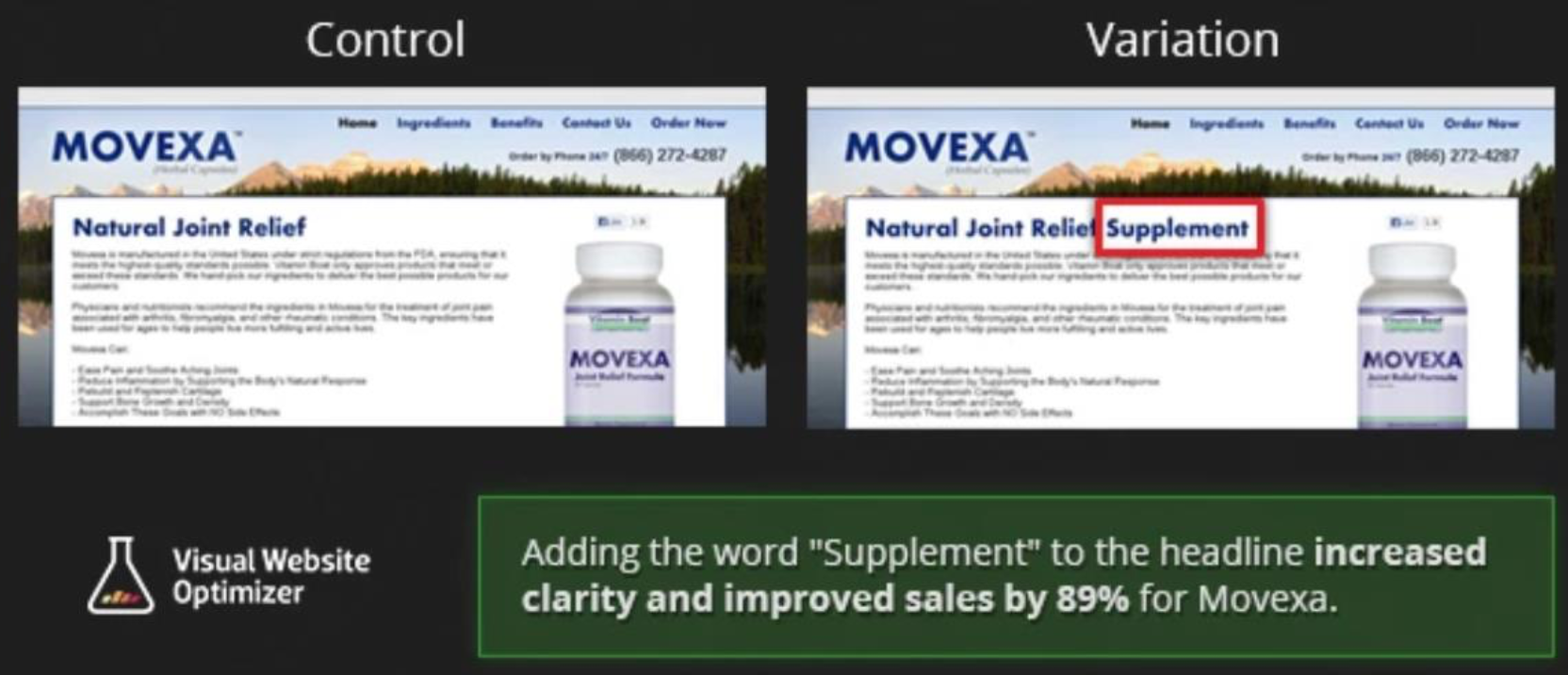
Once you’re happy with it, publish the sales letter on your website and then set up a split test on the headline variations you came up with. Visual Website Optimizer (VWO) is a great tool that makes it easy to run split tests on your website pages:
- You now have a valuable money-making business asset: your “digital sales person” that brings in new orders for you 24/7!